

Ancient Road Publications |
 |
|
The Jesus Family Tomb By Kyle Pope  On Monday February 25, 2007, Simcha Jacobovici (an investigative journalist and filmmaker) and James Cameron (the director of the movie Titanic) announced to the world the discovery of what they claimed is the “Jesus Family Tomb.” The next day, Harper Books released a book entitled Jesus Family Tomb. Then, only a few days later, on March 4, 2007 the Discovery Channel aired a documentary entitled The Lost Tomb of Jesus. This coordinated effort makes the claim that the filmmakers have “discovered” a family tomb which not only belonged to Jesus’ family, but actually contained the bones of Jesus, His wife (Mary Magdalene) and their son. The Talpiot Tomb The book and film appeal to a tomb discovered in 1980 which was accidentally broken open, when a construction crew was building an apartment complex in Talpiot, Israel; a suburb that lies between Jerusalem and Bethlehem. Archeologists excavated red clay about one meter high from the tomb and uncovered and removed ten ossuaries (i.e. bone boxes). Of these ossuaries, six had the following inscriptions: IAA 80-500: “Of Mariamne [also called] Mara” (Greek); IAA 80-501: “Yehuda, son of Yeshua” (Aramaic); IAA 80-502: “Matya” (Aramaic); IAA 80-503: “Yeshua, son of Yoseph” (Aramaic); IAA 80-504: “Yose” (Aramaic); and IAA 80-505: “Marya” (Hebrew-Latin). The ossuaries were cataloged and stored with the Israeli Antiquities Authority (IAA) and the tomb was sealed over to allow construction on the site to continue.
1. The Yeshua bar Yoseph ossuary is Jesus of Nazareth; 2. The other ossuary inscriptions represent Marya - His mother; Yose – His brother (as stated in Mark 6:3); Matya – either the apostle Matthew or a relative from Mary’s lineage (Luke 3); Mariamne – which he argues is Mary Magdalene - His wife; and Yehudah bar Yeshua - His son! 3. Either Jesus was not resurrected or did not ascend bodily; and finally, 4. The statistical probability of this cluster of names not representing Jesus’ family is 1 in 600. Thus it is essentially “proven” that this is “Jesus Family Tomb.” Amos Kloner An important figure in this entire affair is an archaeologist named Amos Kloner. Kloner was one of three archaeologists that excavated the tomb. In 1996 he published the official report of the findings, “A Tomb with Inscribed Ossuaries in East Talpiyot, Jerusalem” in the IAA journal Atiquot 29(1996):15-22. Kloner is the one who actually introduced Jacobovici to the find in 2003, when he was doing work on the now famous James Ossuary.
Which One Is Jesus? As Kloner mentions, a great number of ossuaries have been found with a “Yeshua” or Jesus inscription. Yet, Jacobovici has drawn the conlusion that this tomb is Jesus of Nazereth. Why not some of the others? In 1873 Claremont-Ganneau found, near the Mount of Olives a number of ossuaries with inscriptions including the name “Yeshua" (="Jesus”) commemoratively inscribed on the outside (“Jerusalem Burial Cave Reveals: Names, Testimonies of First Christians.” By Jean Gilman Jerusalem Christian Review). Two other ossuaries were discovered in 1945 by E.L. Sukenik, at Talpiot that bear the inscriptions “Jesus, Woe!” and “Jesus, Lament!” (A Brief Survey of Early Christian Inscriptions as Witnesses to Christian Faith. By Walter M. Shandruk). Why wouldn’t we rewrite history for these finds? The “Jesus” Inscription
The “Mary” Inscription
The James Bone Box One of the 10 ossuaries taken from the Talpiot tomb has disappeared since its discovery. The film makers suggest that the missing ossuary may be the famous “James” ossuary brought before the public in 2002, which reads - “Yacob, son of Yoseph, brother of Yeshua.” This ossuary, which from the antiquities market into the possession of collector Oded Golan is currently a part of a forgery trial against Golan. Based upon studies of the patina (the chemical coating that accumulates on ancient objects) the filmmakers actually make a good case that it may have came from this tomb. The final word on the legitimacy of this object has yet to declared. Problems With the Theory 1. It is a wealthy tomb in Judea. From all that we know about Jesus and His family it is difficult to explain why a poor Galilean family from Bethlehemite stock, would have a fairly expensive tomb in Jerusalem. According to Kloner the tomb belonged to a middle- or upper-middle-class Jewish family during the first century and the cave was in use for 70-100 years by the family (“Biblical scholars reject filmmakers' claim about tomb of Jesus” By Judith Sudilovsky Catholic New Service).
A comparison of the “Jesus” inscription with the with the Judah bar Yeshuah inscription at the least presents this possibility. In the book, in a fictional narrative portion, the assertion is made that the disturbance of the tomb was during the crusades, yet Kloner simply says “antiquity.” Why arbitrarily say the crusades? To support the DaVinci code idea that it was Templars who discovered some secret! 3. The names are common – or even imitated after the gospel was spread. The statistics game that the filmmakers play relies upon assumptions about the population of Jerusalem 2000 years ago. It presumes to know what cannot be known. 4. The filmmakers make too many “pop-culture” assumptions. They assume the Mary as Jesus’ wife. They assume Mariamne is Mary Magdalene. Why not Martha (from “Mara”)? They assume that the Judah is Jesus’ son and that the Jose is Jesus brother. Why not conclude that Jose=Joseph is the father of the Jesus’ inscription? If so, even if the Jose were to be Jesus’ brother, the Judah son of Jesus would be great nephew, not his son! 5. They are too quick to accept apocryphal sources and reject the canonical. Jacobovici treats as authoritative a 4th century apocryphal text, or Gnostic sources which are themselves contradictory and yet rejects the 13,000 manuscripts of the New Testament The Testimony of Scripture The testimony of Scripture makes it clear that Jesus ascended before their eyes (Acts 1:9-11). His bones, although a part of His glorified resurrection body were not left behind (I Corinthians 15:47-53). John took Mary into his house (John 19:25-27). John was the “Disciple whom Jesus loved.” (John 21:20-24). Jesus came in flesh. He arose & ascended (I Corinthians 15:1-7). The filmmakers act as if their assertions do not conflict with the hope of the gospel, but the fact is that our own hope of resurrection rests upon Jesus’ resurrection. If Jesus’ glorified body was left behind, what hope is there for the Christian? First Thessalonians 4:13-17 in describing the judgment says that we will “caught up” with the body that will “rise” just like Jesus (cf. I John 3:2). What Can We Say Then?
|
 Although
the three archaeologists who first investigated the tomb (Amos Kloner, Yosef
Gat & Shimon Gibson) saw this as simply a First Century tomb with names
common to the period, filmmaker Jacobovici sees something more. He offers the theory
that:
Although
the three archaeologists who first investigated the tomb (Amos Kloner, Yosef
Gat & Shimon Gibson) saw this as simply a First Century tomb with names
common to the period, filmmaker Jacobovici sees something more. He offers the theory
that: 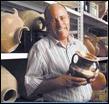 Although
Kloner is featured in the film, he very forcefully rejects Jacobovici’s theory
that this is the tomb of Jesus. According to Kloner there are more than 900
buried tombs just like the “Jesus” tomb within a 2 mile radius of Talpiot. Of
them, 71 bear the name Jesus. (“Bones of Contention Archaeologist Disputes
Claims in James Cameron’s ‘The Lost Tomb of Christ.’” by Matt Gutman. ABC
News). He suggests that the name of “Jesus son of Joseph” has been found
on three or four ossuaries and that these are common names. (“Kloner: A great
story, but nonsense.” By David Horovitz. Jerusalem Post, Feb. 27,
2007). He has even gone so far as to say that “It makes a great story for a TV
film, but it’s impossible. It’s nonsense.” (“New film claims Jesus buried in
Talpiot” By David Horovitz. Jerusalem Post, Feb. 25, 2007).
Although
Kloner is featured in the film, he very forcefully rejects Jacobovici’s theory
that this is the tomb of Jesus. According to Kloner there are more than 900
buried tombs just like the “Jesus” tomb within a 2 mile radius of Talpiot. Of
them, 71 bear the name Jesus. (“Bones of Contention Archaeologist Disputes
Claims in James Cameron’s ‘The Lost Tomb of Christ.’” by Matt Gutman. ABC
News). He suggests that the name of “Jesus son of Joseph” has been found
on three or four ossuaries and that these are common names. (“Kloner: A great
story, but nonsense.” By David Horovitz. Jerusalem Post, Feb. 27,
2007). He has even gone so far as to say that “It makes a great story for a TV
film, but it’s impossible. It’s nonsense.” (“New film claims Jesus buried in
Talpiot” By David Horovitz. Jerusalem Post, Feb. 25, 2007). 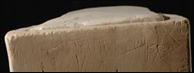 The fact is that
the “Jesus” inscription itself, which was found in the Talpiot tomb is not
beyond question. It is not only the sloppiest of the six, but it has a large X
mark presumably before the name. The two publications of this ossuary, L.Y.
Rhamani’s Catalog of Jewish Ossuaries, and Kloner’s report both put
question marks beside the translation “Yeshua”(?). If the X mark is understood
to be the Hebrew letter taw (as Jacobovici himself argues in the
conclusion of his book) the name is not Yeshua but Teshua “meaning
“salvation” (cf. Psalm 144:10). Teshua is a name still used in modern Hebrew.
Both Rhamani and Kloner conclude that the reading is Yeshua largely because of
the other ossuary with the inscription “Yehuda, son of Yeshua.” Even if the
inscription is “Yeshua,” in Kloner’s report he writes, “Yehoshua/Yeshua, is the
sixth most common name used during Hellenistic and Roman periods in the land of
Israel” (p.18).
The fact is that
the “Jesus” inscription itself, which was found in the Talpiot tomb is not
beyond question. It is not only the sloppiest of the six, but it has a large X
mark presumably before the name. The two publications of this ossuary, L.Y.
Rhamani’s Catalog of Jewish Ossuaries, and Kloner’s report both put
question marks beside the translation “Yeshua”(?). If the X mark is understood
to be the Hebrew letter taw (as Jacobovici himself argues in the
conclusion of his book) the name is not Yeshua but Teshua “meaning
“salvation” (cf. Psalm 144:10). Teshua is a name still used in modern Hebrew.
Both Rhamani and Kloner conclude that the reading is Yeshua largely because of
the other ossuary with the inscription “Yehuda, son of Yeshua.” Even if the
inscription is “Yeshua,” in Kloner’s report he writes, “Yehoshua/Yeshua, is the
sixth most common name used during Hellenistic and Roman periods in the land of
Israel” (p.18).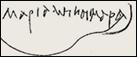 The
inscription “of Mariamne [also called] Mara” has its own problems. The
filmmakers appeal to a 4th century apocryphal Acts of Philip to
identify Mariamne with Mary Magdalene. Although it is unclear from this very
work whether, this woman is Mary Magdalene, they appeal to this because of its
authoritative portrayal of Mariamne (i.e. teaching, baptizing, etc.) This
leads the filmmakers to suggest that “Mara” should be understood from the
Aramaic to mean “Master.” They ignore Kloner’s report which writes, “The name
Mariamne, a variant of Miriam … is inscribed on more than 20 ossuaries in
Israel State Collections…Mara, a contraction of Martha, is used here as a
second name. This too is common…” (p. 17). Jacobovici does not even mention
this possibility. Why? It does not support the “pop-culture,” DaVinci Code
notion that sees Mary Magdalene as the wife of Jesus and leader of the
early church!
The
inscription “of Mariamne [also called] Mara” has its own problems. The
filmmakers appeal to a 4th century apocryphal Acts of Philip to
identify Mariamne with Mary Magdalene. Although it is unclear from this very
work whether, this woman is Mary Magdalene, they appeal to this because of its
authoritative portrayal of Mariamne (i.e. teaching, baptizing, etc.) This
leads the filmmakers to suggest that “Mara” should be understood from the
Aramaic to mean “Master.” They ignore Kloner’s report which writes, “The name
Mariamne, a variant of Miriam … is inscribed on more than 20 ossuaries in
Israel State Collections…Mara, a contraction of Martha, is used here as a
second name. This too is common…” (p. 17). Jacobovici does not even mention
this possibility. Why? It does not support the “pop-culture,” DaVinci Code
notion that sees Mary Magdalene as the wife of Jesus and leader of the
early church!  2. The tomb
was disturbed sometime in the past. Although it is touched upon in the
book and in Kloner’s report, the film doesn’t even mention this fact. Kloner
writes, “The blocking stone (golal), apparently removed removed in
antiquity was not found…Sealing stones for the kokim [niches] were
apparently removed in antiquity and were not found” (p. 16). This fact
presents the possibility that some of the inscriptions could be graffiti.
2. The tomb
was disturbed sometime in the past. Although it is touched upon in the
book and in Kloner’s report, the film doesn’t even mention this fact. Kloner
writes, “The blocking stone (golal), apparently removed removed in
antiquity was not found…Sealing stones for the kokim [niches] were
apparently removed in antiquity and were not found” (p. 16). This fact
presents the possibility that some of the inscriptions could be graffiti. Is
this Jesus’ bone box? – No. It is either a common name or graffiti placed
their either innocently or for malicious purposes. Is this the bone box of
Jesus of Nazareth? – No. If it even does read “Yeshua” it is another Joshua of
the first century. Does this prove Jesus was married with a child? – Absolutely
not. That is an assumption with no proof. The fact is that if He had been
married it would not have been wrong. Yet there is no record of it and no
record of their persecution. On the other hand there is clear evidence of the
persecution of His brothers (see Eusebius, Ecclesiastical History Bk 3.20).
Could this be the tomb of Jesus’ family? – Perhaps. Or, even early Christians
or Jews who knew the names of the gospels. Even if that were the case it
changes nothing about what has been revealed to us about Jesus Christ of
Nazareth, who remains “the same yesterday, today and forever” (Hebrews 13:8).
Is
this Jesus’ bone box? – No. It is either a common name or graffiti placed
their either innocently or for malicious purposes. Is this the bone box of
Jesus of Nazareth? – No. If it even does read “Yeshua” it is another Joshua of
the first century. Does this prove Jesus was married with a child? – Absolutely
not. That is an assumption with no proof. The fact is that if He had been
married it would not have been wrong. Yet there is no record of it and no
record of their persecution. On the other hand there is clear evidence of the
persecution of His brothers (see Eusebius, Ecclesiastical History Bk 3.20).
Could this be the tomb of Jesus’ family? – Perhaps. Or, even early Christians
or Jews who knew the names of the gospels. Even if that were the case it
changes nothing about what has been revealed to us about Jesus Christ of
Nazareth, who remains “the same yesterday, today and forever” (Hebrews 13:8).|
Pope, Kyle. "The Jesus Family Tomb" Truth Magazine 51.8 (August 2007): 17-19. |

|
Home Studies Outlines Photos Graphics Fonts Books Tracts Hymns Contact Us |
